In a fashion ecosystem undergoing profound transformation — shaped by economic shifts, technological acceleration, and evolving cultural balances — few leaders are able to articulate strategy and meaning with equal clarity.
At the helm of TRANOÏ, Boris Provost embodies a new generation of decision-makers for whom growth extends beyond commercial performance to embrace a broader vision of structure, guidance, and cultural responsibility.
Under his leadership, TRANOÏ has undertaken a significant evolution: moving from a primarily transactional model centered on space rental to positioning itself as a strategic growth partner — attentive not only to brands’ economic potential, but to their coherence, positioning, and long-term development.
In this conversation with Le Huitième Art, Boris Provost reflects with clarity on the complexity of contemporary fashion — a singular territory where creation, market forces, cultural diplomacy, and technological innovation intersect — while reaffirming the essential role of authenticity as a lasting driver of beauty.
I. The Need for Creation
Beyond economics and trends, fashion seems to respond to a deeply human need: to
represent oneself, to tell one’s story, to exist in the gaze of others. Do you believe that
clothing creation is, at its core, a universal form of identity expression comparable to the
major arts?
I believe clothing can be a very strong form of identity expression. It allows people to
shape how they exist in the world and how they are perceived. That can be powerful.
But, it also exists within systems of commerce and consumption. The tension between
artistic expression and economic reality is what makes fashion uniquely complex. When
designers consciously engage with that tension, clothing can absolutely reach the level
of major art forms.
II. The Transformation of an Economic Model
TRANOÏ has evolved from a model based primarily on space rental toward a broader
role as a growth partner for brands. Does this transformation reflect, in your view, a
deeper mutation of the fashion industry itself, where value now lies as much in support
and guidance as in the product?
Of course, I do think it reflects something much bigger happening in the fashion
industry. For years, the model was mainly transactional, you rented space, showed your
collection, and took orders. But today, the challenges brands face are far more complex
such as global markets, digital pressure, sustainability challenges… In this context, just
offering space is not enough anymore.
What brands really need now is support, strategic guidance, connections, visibility, and
long-term partnership. Growth is no longer just about selling a collection, it’s about
building positioning.
So for me, Tranoi ’s evolution is not just a business shift. It’s a response to a deeper
transformation in fashion, where growth depends as much on support and expertise as
on creativity itself.
III. The Diplomacy of Beauty
This season you are welcoming again CANEX with African designers, Creative Hungary
under Budapest Select, and a curated Italian Savoir-Faire pathway. Do you see
TRANOÏ as a form of cultural embassy? Can fashion succeed where traditional
diplomacy sometimes struggles — by creating a universal language based on beauty
rather than borders, allowing genuine dialogue between cultures?
Yes, I really see Tranoï as a cultural embassy. Fashion has this amazing ability to cross
borders and speak a universal language, one based on creativity, beauty, and human
expression. Unlike traditional diplomacy, which can be slow or complicated, fashion
creates spaces for real dialogue, where designers, buyers, and audiences from different
cultures can meet, share ideas, and inspire one another.
By welcoming initiatives like CANEX, Creative Hungary, and Italian Savoir-Faire, we’re
celebrating both diversity and connection. It’s proof that authentic creativity can bring
people together and build understanding in ways that words alone sometimes can’t.
Fashion doesn’t just reflect culture,it creates bridges between them.
IV. Technology and Intuition
This edition integrates AI insights from Heuritech and color intelligence from Première
Vision. In this dialogue between mathematical precision and creative intuition, how can
we preserve the unpredictability, poetry, and magic that remain the essence of creation?
Can artificial intelligence become an ally of this alchemy rather than its adversary?
I don’t see technology and intuition as opposing forces, I see them going along.
Tools like AI or color intelligence platforms such as Premiere Vision and Heuritech bring
clarity. They help us read signals, anticipate shifts, and reduce uncertainty. But they
don’t create emotion. The magic of creation lies precisely in what cannot be calculated,
in cultural sensitivity, in personal vision. So I believe artificial intelligence can be
powerful when it stays as a tool, not a decision maker. It can be its ally, as long as
humans remain the creators of meaning and emotion.
V. Cultural Responsibility
Selecting brands also means selecting visions of the world. In 2026, what are the
almost “intangible” or emotional criteria that make a brand resonate with you strongly
enough to open the doors of the Palais Brongniart to it?
For Tranoi, selecting a brand is never just about the product, it’s about the worldview
behind it. In 2026, beyond quality or commercial potential, it is also about whether the
brand has a clear voice? A real point of view? Is there coherence between what it says,
what it creates.
It should carry a story, a cultural awareness, a sense of responsibility toward its time
whether that’s social, environmental, or artistic.
Welcoming the brand to the Palais Brongniart means offering a platform of their
meaning. So I look for brands that don’t just follow trends, but express a vision, brands
that contribute to the cultural conversation rather than just occupying space within it.
VI. The Responsibility of the Ephemeral
A trade show is, by nature, temporary. How do you inscribe durability within this short
timeframe? Is it through mentorship and the transmission of knowledge to emerging
designers that TRANOÏ ultimately builds its most lasting legacy?
It can be a definition of temporality as the show lasts for a few days, but what remains
are the connections, the opportunities, and the momentum it creates.
When a young designer meets the right buyer, receives the right advice, or gains clarity
about their positioning, that impact can shape years of development.
If Tranoi can help emerging brands structure themselves, refine their vision, and
understand the market without losing their identity, then the legacy goes far beyond the
event itself. In that sense, the most lasting footprint of a temporary show is the growth it
enables long after the doors close.
VII. The Global Aesthetic Experience
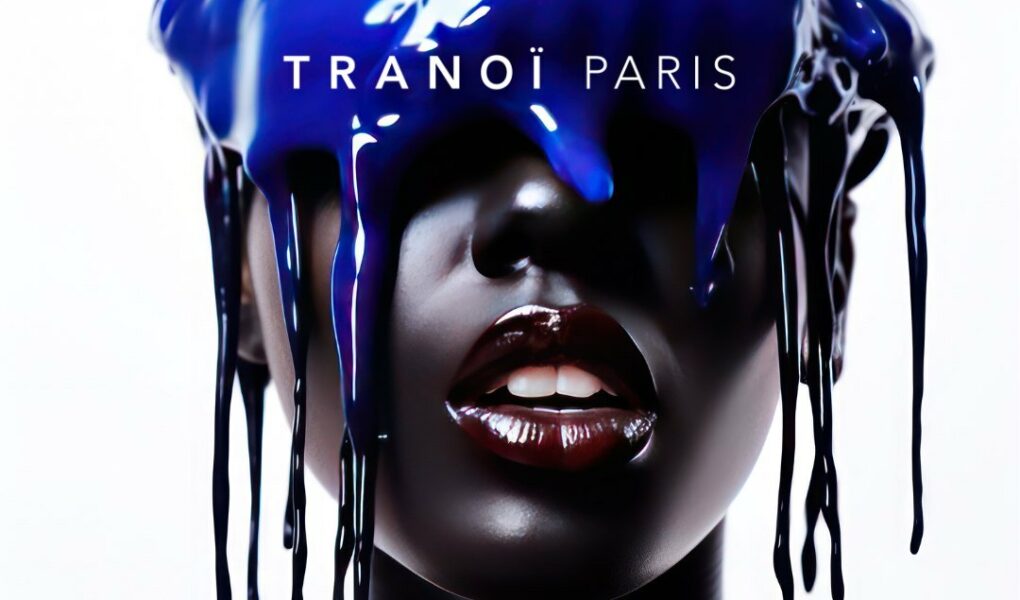
This season’s visual campaign, created in collaboration with KODD Magazine, carries
an almost hypnotic power — the flowing blue, the face becoming sculpture. Do you
believe contemporary fashion is now constructed as much through image and narrative
as through the garment itself?
Yes, I think fashion today is absolutely constructed through image and narrative as
much as through the garment itself. A piece of clothing doesn’t exist in isolation
anymore. It lives through the way it’s staged, photographed, filmed, and shared. In
many ways, the narrative gives depth to the garment, it frames how we perceive it and
why it matters.
But that doesn’t diminish the importance of the product. On the contrary, it raises the
level of responsibility. If the story is powerful, the garment has to live up to it.
So I see image and narrative not as superficial layers, but as extensions of creativity.
Today, fashion is a dialogue between form, storytelling, and cultural context and the
strongest brands are the ones where all three are aligned.
VIII. Fashion as Art
If we consider fashion as one of the major artistic expressions of our time — one that
connects the perishable body to an enduring dimension, and the present moment to
collective memory — what imprint would you like TRANOÏ to leave in the imagination of
future generations of creators? What legacy do you hope to transmit? Perhaps the
certainty that beauty, when it is authentic, never entirely disappears?
If fashion is one of the great artistic expressions of our time, connecting the fleeting
moment to something more lasting, and the individual body to collective memory, then I
believe Tranoï leaves a sense of curiosity, courage, and authenticity in the minds of
future creators.
We want them to feel that fashion isn’t just about trends or selling clothes, it’s about
ideas, stories, and connections. Our hope is to pass on the belief that true beauty, when
it’s authentic, never really disappears. By supporting emerging talents, celebrating
craftsmanship, and creating spaces where creativity can meet opportunity, Tranoï’s
legacy is about inspiring future generations to explore, experiment, and create in ways
that are meaningful, lasting, and uniquely their own.
CONCLUSION
Through his answers, Boris Provost outlines a demanding and forward-thinking vision of the role a platform such as TRANOÏ can play within the international fashion landscape.
More than an exhibition space, TRANOÏ emerges as a framework for strategic and intellectual structuring — a place where brands are encouraged to affirm a clear vision, refine their positioning, and anchor their creativity within a sustainable dynamic.
By advocating for balance between intuition and technology, artistic identity and economic responsibility, Boris Provost defends a mature understanding of fashion — one that acknowledges its inherent tensions while remaining firmly committed to guidance, transmission, and long-term impact.
If an institution’s legacy is measured by the imprint it leaves on those it supports, then TRANOÏ’s enduring contribution may well lie in this shared conviction: that beauty, when authentic and guided by responsibility, possesses the rare ability to endure beyond the moment.
CHIKH Larbi
Editor in Chief – Le Huitième Art
Haute couture : LE HUITIÈME ART
Image de couverture: © KODD Magazine pour TRANOÏ
Thank you The Lede Company for the exclusive interview with the CEO of TRANOÏ.